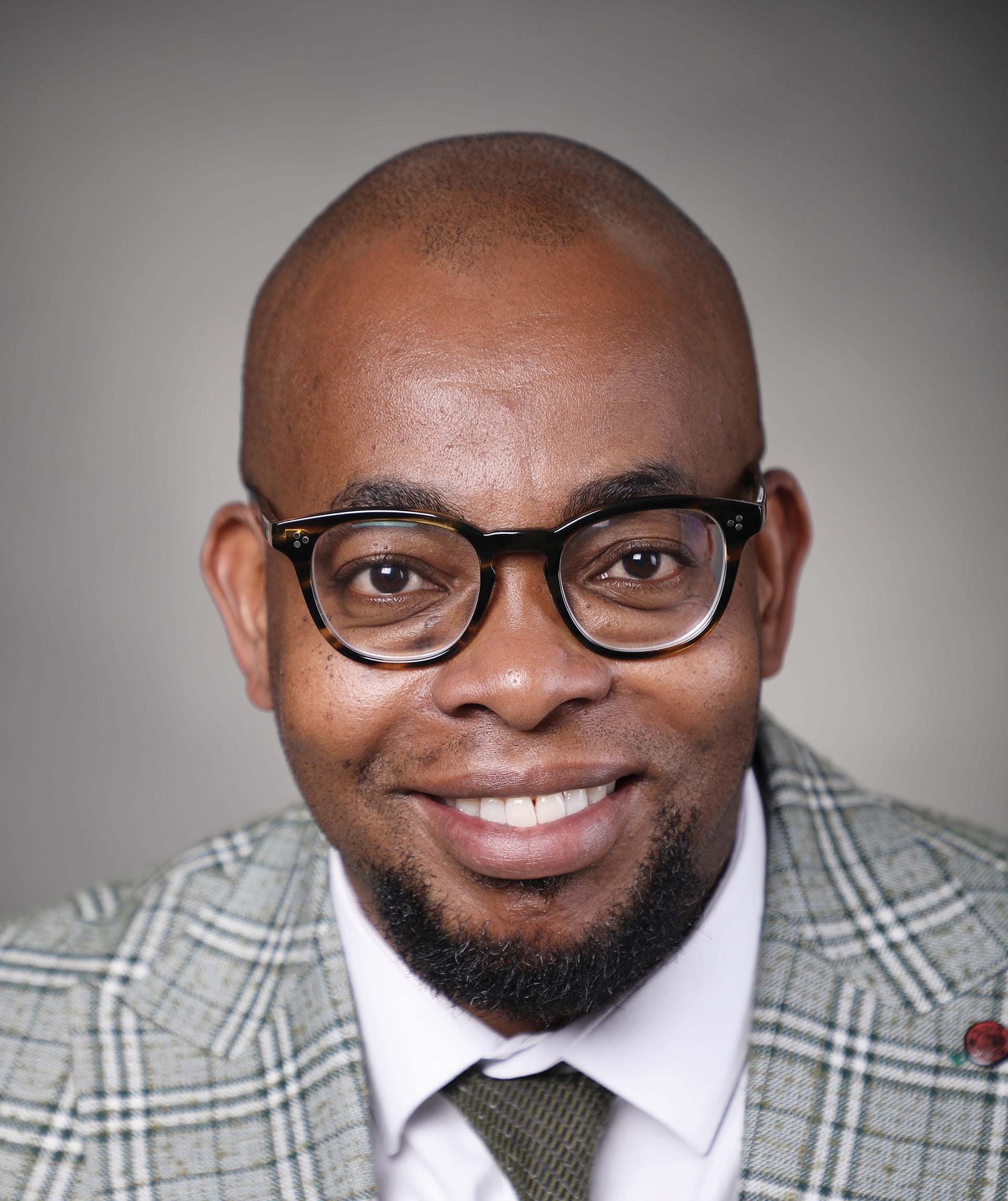
By Tshenolo Mainetja
Interview with Dr Mthobisi Zondi
Dr Mthobisi Zondi is the visionary leader of Sandock Austral Defence, driving innovation and transformation with over 20 years of expertise in both industry and public sectors. In addition to his role as CEO, Dr Zondi holds several key positions. He is the Executive Chair of Sandock Austral Group Holdings (Defence and Security), Chair of LogiDist Group (Diversified Investment Co), Chair of Tseba Tanks and Steel Structures (Steel Manufacturing Co), Chair of PalletBiz SADC (Regional Pallet Manufacturer), and Chairperson of the Innovation and Future Defence Committee of the Aerospace Maritime and Defence Industry Association.
His distinguished career includes 12 years at the South African National Defence Force, where he served as Head of Defence Supply Chain Integration and later, as Chief Defence Materiel. He has also been an Executive Manager at PetroSA, overseeing offshore support logistics operations, and has held various senior roles at Transnet, including Chief Operations Manager at Richards Bay Terminals and National Capacity Planning Manager for Transnet Port Operations Container Business. Additionally, he served on the inaugural Board of the South African National Space Agency (SANSA).
Dr Zondi holds a PhD and MSc in Mechanical Engineering from the University of KwaZulu-Natal (UKZN), an MSc in Transport Economics and an MSc in Logistics Management from the University of Antwerp, an MBA from the University of Cape Town (UCT), and a Postgraduate Diploma in Information Systems from the University of Liverpool.
Beyond the accolades and titles lies a deeply intentional and fiercely self-driven individual whose life story is as compelling as his résumé. In this candid interview, Dr Zondi reflects on the personal philosophy that has shaped his leadership, his unconventional career journey into the defence sector, and the bold business model that distinguishes Sandock Austral Defence. With sincerity and clarity, he speaks about the challenges of leadership, the importance of human capital, and the necessity of agile innovation in a dynamic world.
What follows is a glimpse into the mind of a leader who refuses to conform, who measures success not just in milestones, but in impact—and whose vision for the future is as inclusive as it is uncompromising.
Who is Dr Mthobisi Clyde Zondi outside of the circle that identifies him as an astute individual with many accomplishments?
I am a very practical and intentional person in my approach. Things with me do not happen by accident; I don’t stumble across things. I plan as much as I can, and I’m hands-on in the execution of my plans. I try to surround myself with people who will enhance the plan and supplement my capabilities to execute it. That’s what drives me. I don’t necessarily have anyone I look up to — it has always just been me. I think of myself, my own potential, and what I am capable of, and I have competed with that. I am self-driven, and that has been the case my whole life.
I grew up as an only child with no reference point for measurement. I always thought that what I want to achieve, I can visualize — and I leave no room for impossibility. Perhaps the naivety I carried growing up — of “I can do anything” — helped me. I remember as a young boy in Standard 5, I once said to my mother, “You go to work and come back, and your boss decides how much you will earn, and I said, ‘Why don’t you go back and tell him you want to earn more, because we need a better house and better food?’” From that, I decided that when I grew up, no one would tell me how much I should earn — instead, I would tell them how much I want to earn. In my first job after qualifying as an engineer, my mom reminded me of this, and I actually went to my boss and told him how much I want to earn.
Having no reference point and carrying that naivety was a good thing, because it gave me unlimited reach in terms of potential. If I could imagine it in my mind, I believed I could do it — and even now, in my approach to business, this still applies. I do not conform to anything or to any constraints. I set my own standards and allow my team to be as creative as they can be.
Is the direct approach of stating one’s preferred remuneration, if it could be sufficiently substantiated, something you would appreciate in a subordinate?
Yes, of course. This approach simplifies things. My executives, for example, always tell me what they want — then we discuss and ask each other the relevant questions. For example: “Why do you think you’re worth it?” Then they proceed to justify their stance. As open-minded as I am, I don’t have a problem if a person manages to sufficiently address this question. However, if they do not do so well, I will remind them accordingly, and hopefully, we reach a figure where there is a mutual feeling of comfort.
Being assertive as a leader is important — but remember, in a room, you can’t have people with the same level of assertiveness. This leaves no room for progress. Usually, people who are overly assertive already have a path defined. Now imagine trying to decide on a way forward, and all six individuals in the room are overly assertive — consensus will not be reached. We need different people for different roles: one or two assertive people for specific functions, others who are good with compliance for other roles, and those who are excellent with administration for another. Different competencies within an organization are required to complement each other.
What specifically attracted you to the Defence sector?
I was a bursary recipient for Transnet. They sent me to university to study engineering, and thereafter, I worked for them. I climbed up the ladder until I was an Operations Manager. They required me to go abroad again to study. Upon my return, Transnet did not have a position for me, so they referred me to PetroSA.
PetroSA wanted me to manage their entire logistics, and I then became an Executive Manager for Logistics at PetroSA. I was then approached — the defence sector needed a logistics specialist because they were experiencing challenges with military logistics at the time. So, I applied for the position, and I got it. Later, I moved into acquisition and research and technology.
It was a natural progression. My career has always been engineering, logistics, supply chain — and I’ve always worked for government, whether a parastatal or a department. Hence, getting into defence was a natural continuation. I must admit, I enjoy defence — I’ve never worked this long for any other entity.
The intention was always to start my own business at some point. That’s why I started a logistics business back in 2006. I was still working but I had a business. I was doing projects for the private sector, mainly optimization processes and logistical modelling of systems — how to improve efficiencies, increase profits, or reduce costs.
Deviating a bit from the formal interview — for someone who is a university graduate and seeking employment, would you advise them to target the public or private sector?
I don’t think it’s cast in stone. There are private sector companies that can expose a
young person very well. All a young professional wants is to work on proper projects
that accelerate their growth — whether they are an attorney, engineer, or accountant.
You don’t want to be making coffee for your seniors the entire year — you want real
work, so that you can learn and progress professionally.
When I started at Transnet, I did proper engineering work — I was exposed to
meaningful projects. But I’m aware that some of my peers in other divisions weren’t
happy with their exposure, and they wanted to leave for the private sector. Honestly,
it depends on the company. For example, Eskom used to have an excellent
programme for the youth in terms of internships — and 30 years later, some of them
are still there because of the solid foundation laid much earlier. So, it could go either
way. It depends on the entity.
What is one lesson you’ve learnt as CEO that you feel all aspiring leaders in the industry should know?
The most challenging thing about being the CEO of a company you started is that it
requires a lot of patience capital. What I’ve learnt is — you can have a perfect plan,
based on a perfect MBA school model, on how to implement a technology,
commercialise an innovation, and take it to market. But the ideal will always deviate
from reality to an extent that it’s going to cost you a lot — a lot of patience, a lot of
resources, and emotional frustration because the people who believed in your idea
don’t see it materializing as they expected. And you don’t have answers.
That’s when you feel the true cost of leadership. But that’s also when you cannot
afford to give up — because people are looking up to you, and you cannot crumble.
You have to carry on — not just for you, but for everyone who believed in your idea.
Of course, you’ll lose some people along the way, but others will stick with you
because they know that if or when it happens — if it materializes — it’s going to be
big.
That’s what distinguishes me as a start-up CEO from corporate CEOs with fully
operational establishments. There was a time I was literally operating within a time
frame of one day at a time. I’d wake up, make a cup of coffee, sit in my study, come
up with ideas, put them all on the board, and pursue them — hoping one would
materialise and help implement the others.
I had one or two people who were with me through this process. That kind of support
is instrumental. You’re lucky if you have two or three people like that, but even one is
enough. Mental health is also a real issue — if you are completely alone and things
are not working the way you want, and you have a family and other non-work-related
responsibilities — it’s not easy. Leading is not easy. Even though many yearn for it,
it’s a very big sacrifice. You lead people based on their belief in you and your ideas
— and if your ideas don’t deliver what you promised, it becomes a problem. It’s truly
not for the faint of heart.
What distinguishes your business model from others?
Companies sell products. Everyone builds a vehicle, a radar, a sensor, or a machine
gun. I don’t do that. I decided very early that I would not go down that path. I focus
on building engineering capability to take on any assignment across the broad
spectrum of opportunities in the defence sector.
I don’t go to a client and say, “Here is product ABC, it does wonders, please buy it.”
No. I ask, “What problem are you facing?” A client may say they have a combination
of modern and legacy systems in the military — and operators can’t handle both.
Spares for the older systems are obsolete, but the equipment is still needed. I then
offer an incremental modernisation strategy, using insertion of technology building
blocks.
If for example their budget allows for R50 million per year, we modernise a given
number of machines per annum until we reach a baseline for entire fleet — and from
there, move into full next-gen modernisation. We don’t buy new vehicles — we
upgrade the drive train, hydraulics, and cabin.
That’s what sets Sandock Austral Defence apart. We offer tailor-made solutions —
not shelf products. This model requires internal and extended capability, which is
why we’ve built a strong partner network. I don’t believe in building a massive factory
that produces 30 different products. Instead, we’ll have labs to test technology and
engineers to design solutions. The factory portion is outsourced — someone else
builds the component, and we integrate it, retaining the IP.
People often ask how I decide to take on a project. I don’t call it a project — I call it
an assignment. I assess what we can do in-house, what our partners can handle,
and what we’re missing. If we have 70% capability, we take the assignment and
figure out the rest along the way. You can’t wait to have 100% capability. In today’s
world, technology evolves quickly. Development, application and improvement must
happen in parallel — not in sequence.
You don’t need massive infrastructure — you need people who can think on their feet
and generate ideas. When I meet with my engineers and explain a problem, ideas fly
around the room. We go to the drawing board and get to work.
The business I envisioned is dynamic — not dependent on the sector but on the
application of technology. Dependency is a huge risk. If you build a rigid, simplistic
model, you set yourself up for disaster. Flexibility is key. If things change, you should
be able to pivot and survive.
My CTO always says, “We’re not building for this generation — we’re building for two
generations ahead.” Look what happened to Blackberry and Nokia.
Dr Zondi, could you share an example of an innovative approach or solution your team has developed that you are particularly proud of?
I think it would be the Metro J — a situational awareness and response system that
we developed in response to two major events in KZN: the Civil Unrest of July 2021
and the floods of 2022. The Civil Unrest, in particular, caught authorities off guard.
There was no holistic picture of what was happening — no intelligence, no visibility.
They were responding blindly, and resources were not being used effectively. That
was a big problem.
So we proposed, at eThekwini Metro level and across its regions, an integrated
situational awareness system to give a single picture of what was happening in
various segments of the city, where the hotspots are, and more. That intelligence
could then inform a central control room’s response, guiding decisions — whether
the situation required a non-lethal or a lethal intervention.
We developed this technology in a very short time using commercially available
sensors. The only lab component was the software — to integrate all the systems.
We did the same for the Disaster Management Unit in KZN. The entire system was
developed and tested in six months. It was one of those projects that showed us: we
can do this. We later started developing similar technologies for other countries,
offering that same capability.
Sandock Austral recently participated in the PPP Conference hosted by AMD in partnership with DefenceWeb. What were your key takeaways, and how do you see PPPs shaping the future of the defence sector?
The key takeaway from the PPP Conference was the need to change the current
paradigm. In South Africa, PPPs have historically been used for only three things:
road concessions, physical accommodation buildings, and operating existing
government facilities like wastewater treatment plants. That’s how it has been since
PPPs were introduced over 20 years ago.
What we aimed to do through the conference was break that paradigm and show
that PPPs can be used in the defence sector — particularly for equipment
sustenance. Through this model, defence can use their annual budget to realise
capabilities they wouldn’t achieve through large, upfront capital expenditure. That’s
why we speak of "contracting for availability" and "contracting for capability."
We’re essentially saying: “We will provide you the operational readiness you need to
fulfil your missions — upfront — and you will pay us over time.” This is a game-
changer, especially considering defence’s budget constraints. It allows the
department to buy more from local industry and, because the contracts are
performance-based, get greater value for money.
What are your top 3 priorities for Sandock Austral Defence over the next 3 months?
The first is to continue diversifying. At the moment, 70% of our income is generated
from defence-related assignments — not necessarily in South Africa, but within the
defence sector overall. We want to diversify so that 60% or more of our income
comes from outside the country, and from industries beyond defence that still require
the types of security solutions we develop.
Second, I need to prepare to exit the company in the next five years. That means
building a solid executive team that can take over. Fortunately, the organization is
busy, so leadership is exposed to different challenges from various assignments.
That diversity is crucial to prepare managers for the realities they’ll face even when
I’m no longer around.
Third, we need to consolidate our partnerships. Our model is asset-light. We don’t
want balance-sheet-heavy factories or machinery. We want laboratories and
precision measuring equipment to test our technologies. We want servers to write
algorithms. So, we must strengthen our network of partners who already have those
assets. We bring them work, and we complement each other. We already have a
solid partner network locally — we now need to replicate that model internationally,
in the countries where we’re already doing work.
Going back to your second priority (building executive leadership in preparation for your exit), what is one core quality you are not willing to compromise on?
It’s people-focus. People are my biggest asset. They are soft, fragile and unlike
machines, prone to fatigue, burnout, mental health issues, and all sorts of
challenges. If they don’t trust you, they won’t be loyal — and they can walk away
with your intellectual property.
You need to be people-centric and sensitive to the human element. That’s one thing I
will never compromise on. If someone is abrasive or behaves like a sociopath —
rubbing everyone the wrong way — I stand to lose good people and, by extension,
the business. In this industry, it’s not just about who built the product. It’s about who
employs the person who knows how to maintain it. That becomes the value driver.
Human capital is my most valuable asset. I cannot hand over the company to
someone who doesn’t understand that. People are multi-dimensional and
multifaceted. You need systems that support them in all those dimensions —
emotionally, physically, professionally. When that’s in place, your most important
assets are taken care of.
It’s the same principle as a farmer tending to his livestock — if chickens are his
income source, he must nourish them. In my case, those assets are my people —
not just engineers, but admin staff, finance, HR — everyone. I have a strong HR
team that constantly gauges staff morale. I never want to be caught off guard —
immersed in work and unaware that the house is collapsing.
What advice would you give to young South Africans who wish to enter the defence sector and make their mark?
Be prepared for a steep learning curve. Defence is a very small community — and
it’s not very welcoming to outsiders. If you really want to be in it, you’ll have to
bulldoze your way in and learn quickly so your voice can be heard.
Otherwise, you’ll find yourself sitting on the periphery, thinking you’re part of the
industry — when in fact, you’re not. You cannot be part of the community if you don’t
have a seat at the table where decisions are made. You need to be willing to learn
rapidly so your contributions are recognised, and you earn that seat.
It takes hard work and determination. And yes, you’ll face resistance. You must be
mentally prepared to overcome that. If we want real transformation in this industry —
not pseudo-transformation — it’s going to take guts and persistence. Because what
we’ve seen in the past is not transformation. It’s the nurturing of Cabals.
That’s not
transformation in my book. You’ll need to force your way in and ensure your
presence drives proper transformation.
If Sandock Austral Defence was a car, what car would it be — and why?
(laughs) It would probably be an amphibious Jeep Gladiator. It’s important to exist and thrive in multiple domains. We’d probably put a propeller on top too — so it can take off if needed. It would be agile, able to operate on soft and rough terrain, fly, and go through water. Multi-domain — no limitations whatsoever.